Archangel Ariel: Meaning, Isaiah 29, Tradition and Associated Stones
Ariel, “lion of God” or “hearth of God”, is a name for Jerusalem in Isaiah 29 before becoming an angel for occultists and an archangel of nature today. Sources and distinctions.
Key points
| Names | Ariel, Ariël, Arael, Ariel of Isaiah |
|---|---|
| Meaning of the name | Ari’el: “lion of God”, or “hearth (of the altar) of God” |
| Sources | Isaiah 29; Ezekiel 43:15-16; Pistis Sophia; Agrippa; Milton; Shakespeare |
| Scholarly tradition | Name of Jerusalem, then an angel (sometimes a demon) for occultists |
| Modern tradition | Archangel of nature, animals and the elements |
| Feast | No official feast |
| Modern stones | Tiger’s eye, green aventurine, moss agate |
Who is Ariel?
Ariel is an ancient name that long referred to something other than an angel. In Hebrew, Ari’el can be understood in two ways: “lion of God” (ari, lion, and El, God) or “hearth of God”, the top of the altar on which sacrifices burned. Both readings have coexisted since antiquity. He is presented in our guide to the archangels.
Do not confuse him with angel No. 46 of the Kabbalistic list, Ariel: the name is written there with other Hebrew letters, and that choir, the Virtues, belongs to a different system. Nor should he be confused with Shakespeare’s spirit of the air, who is a stage character.
Origin and textual sources
| Source | Status | What it says about Ariel |
|---|---|---|
| Isaiah 29:1-2 and 29:7 | Prophetic book of the Hebrew Bible | “Ariel” is a poetic name for Jerusalem, “the city where David encamped”. The prophet plays on the meaning of altar hearth: the city will be like a hearth. |
| Ezekiel 43:15-16 | Prophetic book | The word designates the top of the altar of burnt offerings, a part of the temple; it is not an angel. |
| Mesha Stele (9th century BCE) | Moabite inscription | It mentions an “Ariel of David”, probably a sacred object or place. The meaning is debated. |
| Pistis Sophia (3rd–4th centuries) | Coptic Gnostic text | It cites the “rivers of smoke of Ariel”, an infernal image; the allusion probably refers to the fires of the Gehenna valley. |
| Agrippa, De occulta philosophia (16th century) | Learned magic | Ariel is an angel there, sometimes a demon, governing the earth. |
| Milton (1667) and Shakespeare (1611) | Literature | In Milton, Ariel is a rebel angel defeated by Abdiel. In Shakespeare, he is the spirit of the air in The Tempest. |
In the major religions, Ariel is not a recognised angel. He is a figure of learned angelologies, then of modern systems.
Iconography
There is no ancient iconography of Ariel as an archangel. In today’s esoteric art, he is shown in green and gold tones, sometimes accompanied by a lion or birds, in a setting of forest or wind. These images are recent.
Symbolism: the lion, the hearth and the wind
The lion evokes quiet strength and the royalty of wild beasts; the hearth evokes domestic and sacred fire, warmth, the place where people gather. The wind appeared with Shakespeare. Each image lends Ariel a different character, and it is this richness that has given him a varied career.
Today, spiritual literature makes him the archangel of nature, animals, plants and the elements. This is a contemporary symbolism, which invites us to look at living things with attention. It promises no result.
Feast, day and colour
No official feast. No day of the week is stably attributed to him. Modern colours are green, gold and pale pink; they vary according to authors and come from recent choices, often inspired by nature.
What belongs to tradition and what is modern
- Biblical texts: the word Ariel is the name of a place or an object, not of an angel (Isaiah 29, Ezekiel 43).
- Ancient and learned texts: an angel or a demon, depending on the sources from late antiquity and the Renaissance (Pistis Sophia, Agrippa).
- Literature: a rebel angel in Milton, a spirit of the air in Shakespeare, which have strongly shaped the imagination.
- Modern systems: an archangel of nature and animals, popularised in recent spiritual literature. He varies from one author to another and rests on no religion.
The Catholic Church retains only Michael, Gabriel and Raphael. These correspondences serve as supports for the imagination: they should not be taken as facts.
Stones associated in modern traditions
Nature and the lion inspire the choice of stones. A recent convention:
- Tiger’s eye: quartz with golden glints (hardness 7), evoking the lion
- Green aventurine: sparkling green quartz, commonly used in decoration
- Moss agate: transparent chalcedony with green inclusions that suggest moss
Each stone entry gives its care and precautions.
Respectful practice
- Ten minutes outside: go out to a park, a garden or onto a balcony, and quietly name five living things you see or hear. No result is promised.
- A gesture for living things: put out fresh water for birds, sow a few seeds, or pick up a piece of litter. Observe animals without touching or feeding them, in line with local rules.
- A gentle candle (green or white) placed on a stable base and a non-flammable surface. Keep it in sight, away from pets.
- If you are a believer: pray with the words of your own tradition. Ariel is not recognised by the major Churches; respect their position.
Frequently asked questions
What does Ariel mean?
The Hebrew Ari’el is read as “lion of God” or “hearth of God” (the top of the altar). Both meanings coexist.
Is Ariel in the Bible as an angel?
No. In Isaiah 29, Ariel is a name for Jerusalem; in Ezekiel 43, an element of the altar. The sense of angel comes from later texts.
Is Ariel good or evil?
It depends on the sources: a demon in the Pistis Sophia, an angel in Agrippa, a rebel angel in Milton, a benevolent archangel in modern literature.
Is Ariel angel No. 46 of the 72 angels?
No. The name of angel No. 46 is written with other Hebrew letters and belongs to a different list. See the page of angel No. 46.
Is Ariel linked to animals?
In modern spiritual literature, yes: he is presented as the archangel of nature and animals. This attribution is recent and rests on no ancient text.
Also read
The meanings mentioned belong to tradition and symbolism. They are neither promises of results nor medical advice. Back to Guide to the archangels.
In the shop
Stone jewellery: our products
 Faceted stone necklace with butterfly in real silver-tone leaf, 42 cm
23,90 €
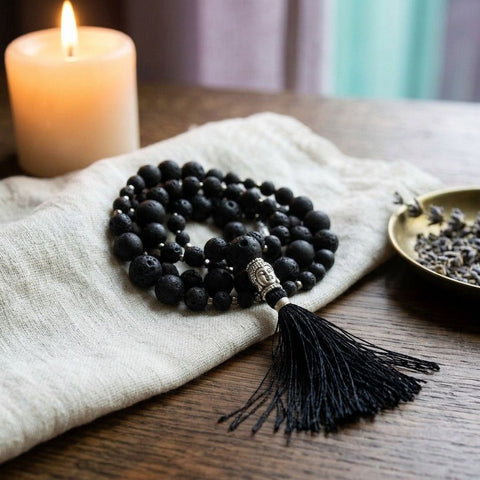 Long lava stone necklace, 42 cm, comes in a gift box with its card
22,90 €
 Engraved brass or copper cuff bracelet: Nepalese designs, adjustable
23,90 €
 Hand-knotted Balinese temple thread bracelet with beads
27,90 €
 Set of three semi-precious stone bracelets with butterfly: 7 gift boxes
31,90 €
 Wooden bead bracelet with Buddha head
10,90 €
 Wooden bead bracelet with lucky coin: 6 tie-on colours
13,90 €
 Tri Hita Karana wood, glass and stone bracelet from Bali
24,90 €