Jade: nephrite and jadeite, meaning and care
“Jade” in fact covers two minerals, nephrite and jadeite, both exceptionally tough. A major stone of ancient China and of the Māori.
Key points
| Colour | Green (the best known), white, grey, lavender, yellow, brown, black |
|---|---|
| Mineral families | Nephrite (amphibole) and jadeite (pyroxene): two distinct species |
| Mohs hardness | 6 to 6.5 for nephrite; 6.5 to 7 for jadeite |
| Special feature | Exceptional toughness: very resistant to knocks |
| Origin of the name | Spanish piedra de ijada, “loin stone” |
| Deposits | Myanmar (jadeite), China, Russia, New Zealand, Canada, Guatemala |
| Common treatments | Bleaching with resin, dyeing |
| Common imitations | Dyed serpentine, glass, dyed quartz |
What is jade?
The word “jade” in fact refers to two different minerals, which specialists only distinguished in 1863, when the chemist Alexis Damour described jadeite:
- nephrite, a calcium and magnesium silicate (amphibole group), common in China, Russia, Canada and New Zealand;
- jadeite, a sodium and aluminium silicate (pyroxene group), rarer and more precious, whose finest deposits are in Burma (Myanmar), Guatemala and Kazakhstan.
In both cases the stone is made of tiny, tightly intertwined fibres, which give it remarkable toughness: it is hard to break, far more so than a crystal of comparable hardness. This is what makes it possible to carve it into fine, durable objects. Its green colour comes mainly from chromium; lavender and white shades are also prized.
The name “jade” comes from the Spanish piedra de ijada, “loin stone”, because it was once believed to help with kidney pain. This belief is ancient and unfounded; the word “nephrite” comes from the same idea.
A stone of civilisations
Jade has accompanied humans for a very long time. In China it has been worked since the Neolithic (the Hongshan and Liangzhu cultures) and it remains regarded as the noble stone par excellence: it is carved into discs, ornaments and ritual objects. The Mesoamericans, the Olmecs and the Maya made masks and adornments from jadeite. In New Zealand, the Māori call jade pounamu and make pendants of great cultural value, often handed down from generation to generation. In Europe too, Neolithic axes were made from Alpine jadeite.
Traditional symbolism
In Chinese culture, jade is a symbol of purity, harmony, wisdom and longevity; it is also associated with the virtues of an upright person. This symbolism belongs to a specific cultural history, which should be respected: a jade bracelet, for example, is given as a wish for happiness. For the Māori, a pounamu has a personal and family dimension: it is often given and handed down, and deserves to be treated with respect.
In modern esotericism, jade is also associated with prosperity and balance. These are traditions, not proven virtues: no stone guarantees health or wealth.
Traditional correspondences
| Area | Common association |
|---|---|
| Chakra | Heart |
| Element | Earth or wood (in the Chinese tradition) |
| Signs | Taurus, Libra and Gemini are the most cited; the lists vary |
For the heart chakra, see the page heart chakra. For other green stones with the same association, see green aventurine.
How to use it
- As a bracelet, ring or pendant: its toughness makes it a piece that lasts, worn across generations.
- As a decorative object: carvings, spheres or seals.
- As a pocket stone: a polished pebble with a soft feel.
- As a gift: knowing its cultural meaning, it is given as a gesture of good wishes.
For more ideas on setting, see the guide to gemstone jewellery.
Care and cleansing
- Cleaning: lukewarm water, mild soap, a soft cloth. For treated jade, avoid soaking it.
- Products to avoid: acids, strong detergents, perfumes and creams, especially on a stone impregnated with resin or dyed.
- Heat: avoid strong heat and sudden changes in temperature, which damage a treated stone.
- Sun: moderate; dyed jade can fade.
- Symbolic cleansing: incense smoke or moonlight. See our cleansing guide.
Treatments and imitations: jade is one of the most imitated stones
Jade buyers should know three categories used in the jadeite trade:
- Type A: natural, only cut and polished, possibly waxed.
- Type B: bleached in acid and then impregnated with resin to lighten the stone. More fragile and less stable over time.
- Type C: dyed. The colour may fade with light or products.
The most common imitations are serpentine (antigorite), which is soft and often dyed, wrongly called “mountain jade” or “Korean jade”, as well as dyed quartz, aventurine, californite (see idocrase) and glass. A very cheap jade that is very green, without shades or internal glints, is suspect. For a valuable piece, a certificate from a gemmological laboratory is the only true guarantee. See also the gemstone glossary.
How to choose
For an affordable piece, nephrite is a good option: sturdy, warm, with softer green tones. Good-quality jadeite is far more expensive. To judge a piece, look at its translucency, the evenness of its colour and the absence of cracks. Pay attention to the exact label: nephrite, jadeite, or “jade” alone, which tells you very little.
It goes well with light stones such as rose quartz, or with warm metals such as brass or gold.
Frequently asked questions
What is the difference between nephrite and jadeite?
They are two distinct minerals. Jadeite is rarer, harder and more expensive; nephrite, more common, is very tough. Both are called jade.
Is jade fragile?
On the contrary, it is very tough and resists knocks well, but jade treated with resin or dyed needs more care.
How can you tell whether jade is dyed?
A colour that is too vivid, uniform and without shades is suspect. Only a gemmological laboratory can confirm it with certainty.
What are “Korean jade” or “mountain jade”?
These are trade names, often given to serpentine. In the mineralogical sense, it is not jade.
What does jade mean in Chinese culture?
It has symbolised purity, harmony and longevity for millennia. It is a cultural tradition to be respected.
Also read
The meanings mentioned belong to tradition and symbolism. They are neither promises of results nor medical advice. Back to Guide to stones.
In the shop
Jade: our products
 Green Indian jade: mini obelisk and set of polished points
15,90 €
 Green stone bracelet sold as “jade”
10,90 €
 Thin 6 mm stone bead bracelet, stretch, wrist size 17 cm
12,90 €
 Stone chip Tree of Life pendant on a black cord, 3 cm
14,90 €
 Seated carved stone laughing Buddha
23,90 €
 Green jade mala: 108 beads of 6 to 8 mm and tassel
35,90 €
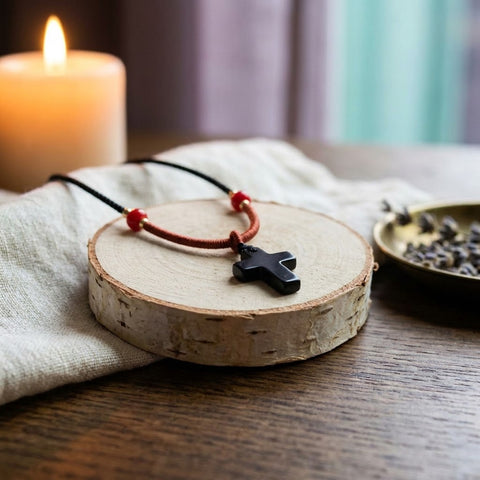 Adjustable cord necklace with small carved stone
21,90 €
 Yellow jade planet on a goldstone stand – 40 mm
29,90 €