-
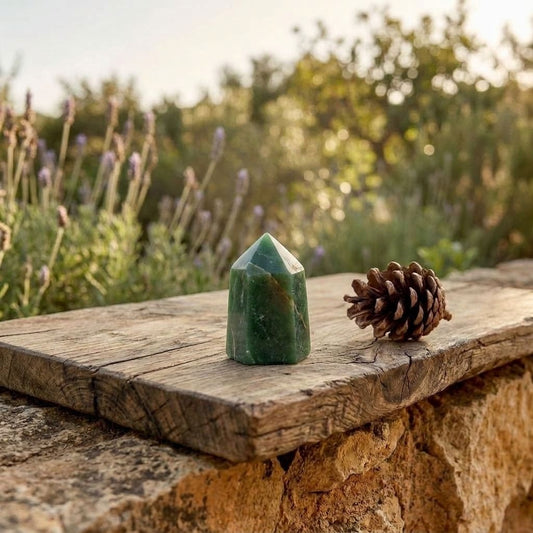
Green Indian jade: mini obelisk and set of polished points
Regular price From 15,90 €Regular price -
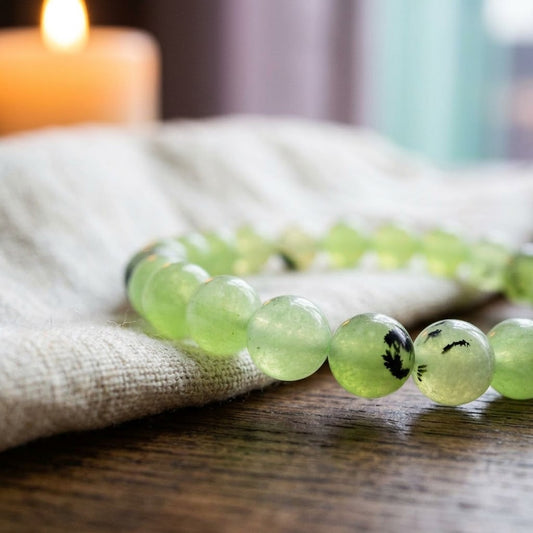
Green stone bracelet sold as “jade”
Regular price From 10,90 €Regular price -
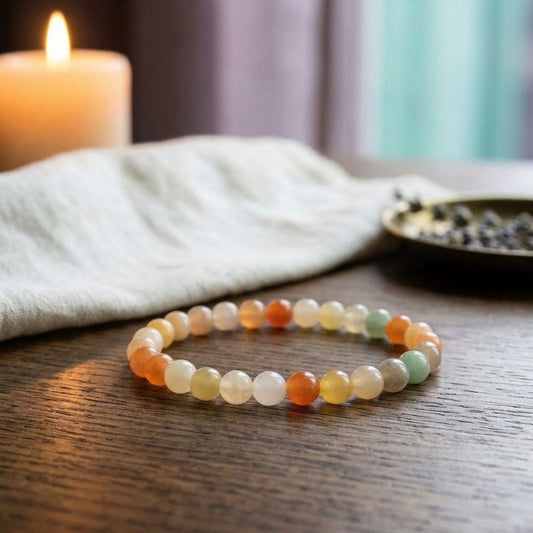
Thin 6 mm stone bead bracelet, stretch, wrist size 17 cm
Regular price From 12,90 €Regular price -
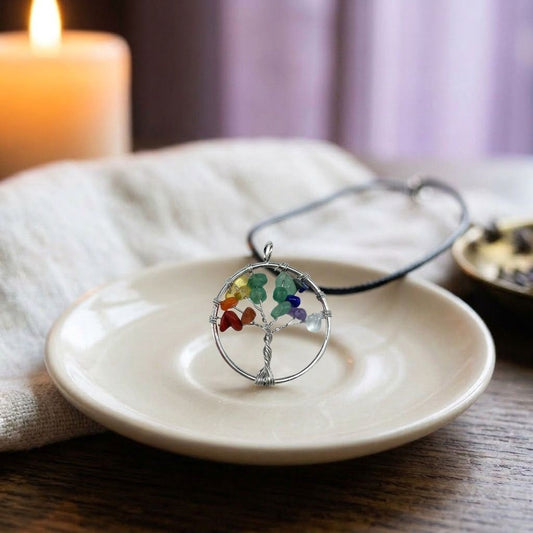
Stone chip Tree of Life pendant on a black cord, 3 cm
Regular price 14,90 €Regular price -
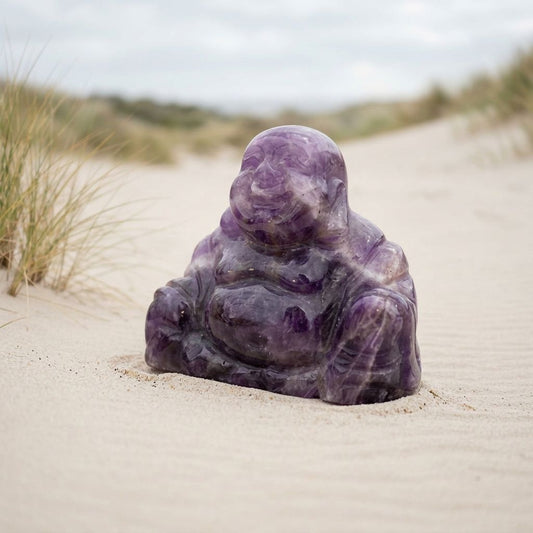
Seated carved stone laughing Buddha
Regular price From 23,90 €Regular price -
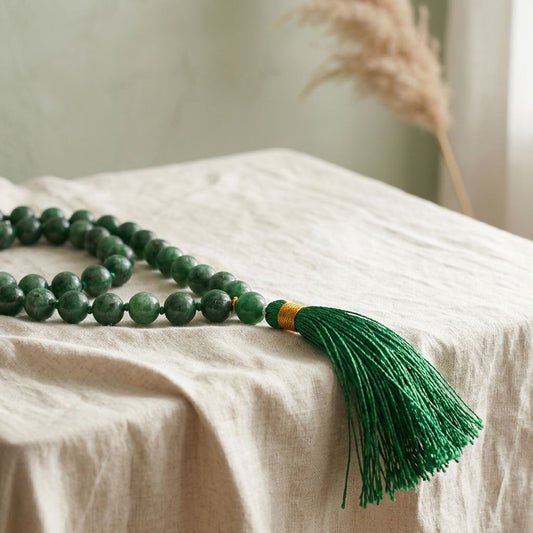
Green jade mala: 108 beads of 6 to 8 mm and tassel
Regular price 35,90 €Regular price -
Adjustable cord necklace with small carved stone
Regular price From 21,90 €Regular price -
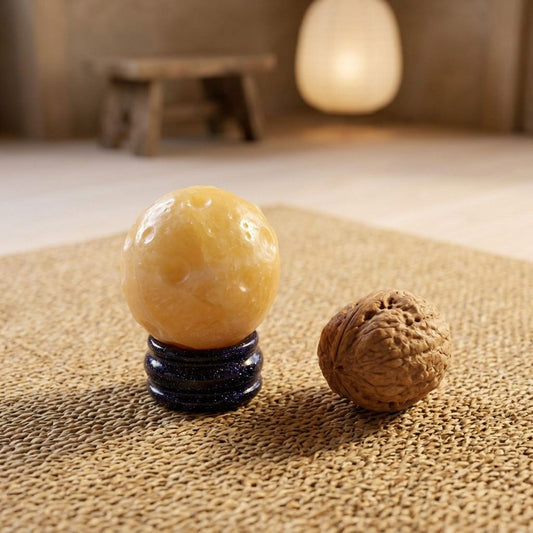
Yellow jade planet on a goldstone stand – 40 mm
Regular price 29,90 €Regular price









More about this category
“Jade” actually refers to two different minerals: nephrite, a calcium and magnesium silicate, and jadeite, a sodium and aluminium silicate. Both are very tough.
- Colour: pale to dark green, white, lavender.
- Family and hardness: nephrite (amphibole) or jadeite (pyroxene); Mohs hardness 6 to 7 depending on the species.
- Traditional symbolism: In several cultures, notably Chinese, jade symbolises harmony, prosperity and wisdom; we present this as a cultural tradition.
- Care: Lukewarm water and a soft cloth; avoid perfumes and chemicals, especially if the stone is dyed.
“Jade” refers to two distinct minerals: nephrite and jadeite (rarer and more expensive). Green stones such as serpentine (antigorite), sometimes dyed, are also sold as jade, and “mountain jade” is a trade name. We state the material when we know it.
Profile: Jade
| Colour | pale to dark green, white, lavender |
|---|---|
| Mineral family | nephrite (amphibole) or jadeite (pyroxene) |
| Hardness (Mohs scale) | 6 to 7 depending on the species |
| Contact with water | yes |
| Sun exposure | yes |
| Traditional symbolism | In several cultures, notably Chinese, jade symbolises harmony, prosperity and wisdom; we present this as a cultural tradition. |
| Traditional chakra | heart |
| Care | Lukewarm water and a soft cloth; avoid perfumes and chemicals, especially if the stone is dyed. |
| Good to know | “Jade” refers to two distinct minerals: nephrite and jadeite (rarer and more expensive). Green stones such as serpentine (antigorite), sometimes dyed, are also sold as jade, and “mountain jade” is a trade name. We state the material when we know it. |
See all the stones in the glossary · Cleansing and recharging
The meanings given are traditions and symbolism, presented for their cultural and personal interest. They are not promises of results and do not replace the advice of a health professional.