Oracles
Egyptian Sacred Animals Oracle: 36 papyrus-style cards by Silvana Alasia (English)
Egyptian Sacred Animals Oracle: 36 papyrus-style cards by Silvana Alasia (English)
In stock
Couldn't load pickup availability
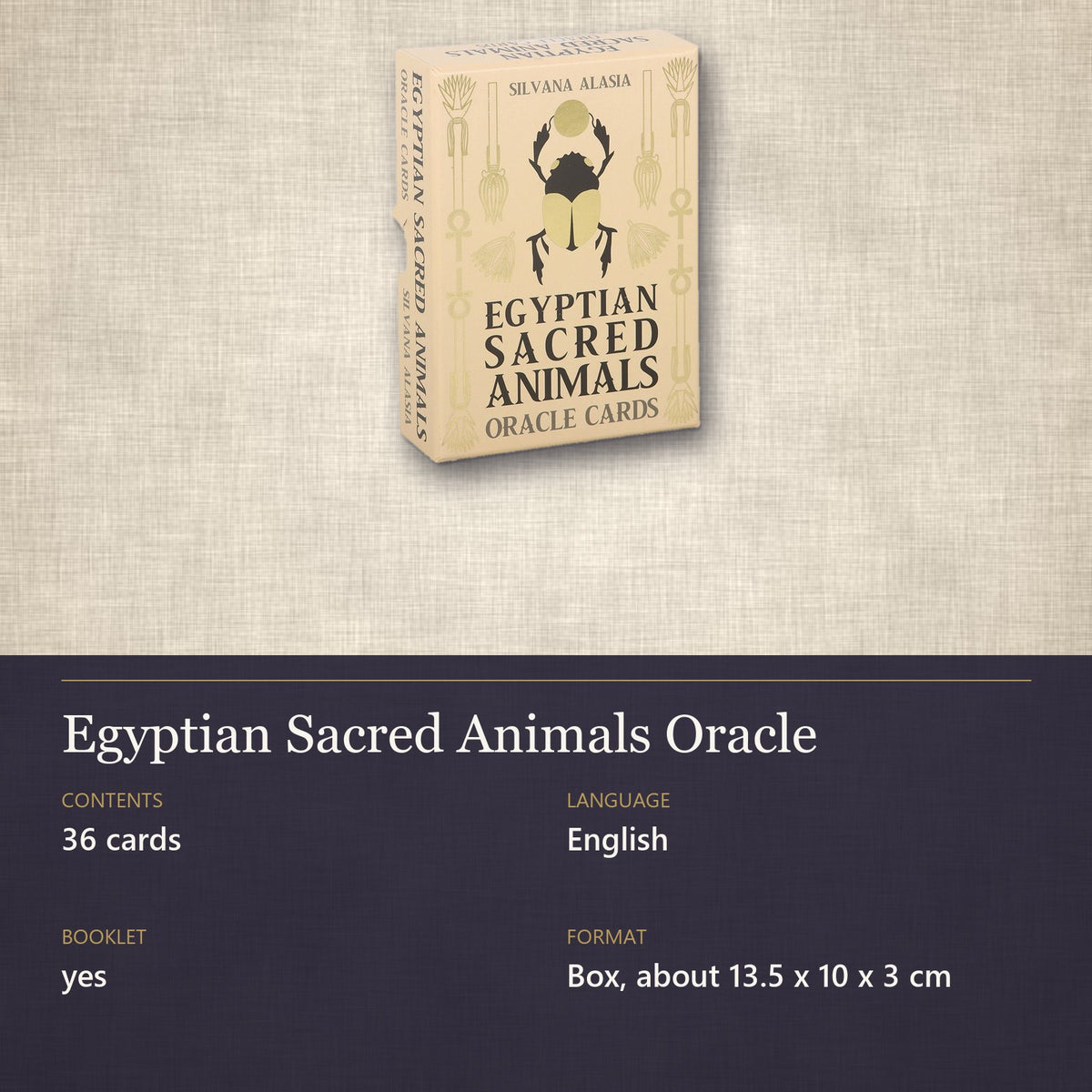
Each card is dressed as a scroll of old papyrus from a sacred bestiary, with a creature that was honoured on the banks of the Nile, real or mythical. Silvana Alasia, who also made an Egyptian tarot, sets the deck on parchment tones, with a scarab on the box. It follows her Egyptian Gods Oracle.
In the box
- 36 oracle cards
- Multilingual instructions
Language of the cards and booklet: English (with multilingual instructions)
Tracked parcel, prepared once you have placed your order. Free delivery on orders of €49 or more up to 5 kg, otherwise €5.99 to €19.99 depending on the weight of the order. Learn more
Product details
- Type : Oracle / card deck
- Number of cards : 36
- Language : English (with multilingual instructions)
- Booklet or book : multilingual instructions
- Publisher : Lo Scarabeo
- Author : Silvana Alasia
- Format : Box, about 13.5 x 10 x 3 cm
- Photos : Publisher's photos, retouched: the artwork may vary slightly
How to use it
Shuffle the cards while you think of a question or of your day, then draw one card for a simple message, or three cards to look at past, present and future. Start with the picture and the title, then read the guidebook if you like. Trust your first impression: there is no wrong way to read an oracle.
Care
Keep the deck in its box, away from damp, heat and direct sunlight. Wipe the cards with a soft, dry cloth only, without water or cleaning products.
Delivery and returns
Shipped in a plain parcel with tracking. You have 14 days from receipt to change your mind. An item that arrives damaged will be replaced or refunded: write to us with a photo.
Symbolism and tradition
An oracle deck has no fixed structure: every card carries an image and a word or a short message, and there is no rulebook about what to ask or how many cards to draw. Readers use oracles for a card of the day, for a quiet moment of reflection or as a prompt for journaling. The messages are an invitation to think and to feel, not a prediction.
This symbolism is a matter of tradition. It is neither a promise of results nor medical advice.