Angel Mumiah (No. 72): Reign, Psalm, Symbolism and Reading
Mumiah, the seventy-second and last angel of the Shem HaMephorash, in the Choir of Angels, reigns from March 11 to 15. Dates, hour, Psalm 116 and the symbolism of completion, according to tradition.
Key points
| Number | 72 of 72 |
|---|---|
| Reign period | March 11 to 15 (and, by convention, March 16 to 20) |
| Reign hour | 23:40 to 00:00 |
| Choir | Angels |
| Associated psalm | Psalm 116, verse 7 (Vulgate: 114, verse 7) |
| Hebrew triplet | מום (Mem, Vav, Mem) |
| Traditional meaning of the name | “End of all things” |
| Symbolic theme | Completion, rest, new beginning |
Who is Mumiah, angel no. 72?
Mumiah is the last angel of the Shem HaMephorash list, the seventy-second, at the end of the Choir of Angels. His name is also written Momiah. A traditional gloss translates it as “end of all things”. French works see in him the angel of completion: what reaches its term, a cycle that closes, the rest that follows effort.
Being last does not give him a minor role: in a circular list, the end of one round is also the threshold of the next. Everything that follows is presented according to the Kabbalistic and esoteric tradition. For the origin of the system, read our introduction to the 72 angels.
Reference points in tradition
| Reference | According to tradition |
|---|---|
| Number in the classical list | 72 of 72 |
| Reign period (5 days) | March 11 to 15 (see below for March 16 to 20) |
| Reign hour (20 minutes) | 23:40 to 00:00 |
| Choir | Angels (the 8th and last of the 8 angels of the choir) |
| Traditionally associated psalm | Psalm 116, verse 7 (Vulgate: 114, verse 7) |
| Triplet of Hebrew letters | מום (Mem, Vav, Mem) with the suffix יה (Yod, He) |
| Approximate zodiac | Pisces (25° to 30°) |
Dates follow the most common calendar (angel no. 1 reigns from March 21 to 25, then five days per angel); sources sometimes shift by a few days, and leap years are handled differently: see how to calculate your guardian angel. According to many authors, the hour is counted in local solar time.
The verse and the name
The verse chosen is a word of calm from Psalm 116: the psalmist addresses his soul and invites it to find its rest again, because the Lord has showered it with blessings. The psalm is a song of thanksgiving after a trial in which the author felt close to death; the verse marks the moment of return to calm.
According to tradition, the name is formed from the triplet of letters מום (Mem, Vav, Mem), followed by the ending Yod and He (Iah, an abbreviation of the divine name). Spellings vary (Mumiah, Momiah) depending on transliteration. Psalm 116 of the Hebrew Bible corresponds to Psalms 114 (verses 1 to 9) and 115 of the Vulgate: verse 7 is therefore verse 7 of Psalm 114. Verse lists differ from one author to another.
What tradition associates with Mumiah
Nineteenth- and twentieth-century French works associate several themes with him:
- Completion: bringing a work to its end, knowing how to close a cycle.
- Rest, a theme drawn from the verse: what follows effort.
- New beginning: the end of the list brings us back to the first angel, Vehuiah, who reigns at midnight right after him.
- Knowledge of nature: some authors credit him with a role in the natural sciences, alchemy and medicine; this is a historical reading, with no therapeutic significance.
These are interpretations: the names of the angels do not appear in the Bible, and these attributions vary between publishers.
A reading for today
Today, Mumiah can serve as an emblem of the art of finishing: closing a file, shutting a chapter, handing over a project, saying goodbye to a place or a period of life. Many people leave things hanging because ending also means giving up what could have been.
If an ending shakes you (bereavement, separation, job loss), this figure does not replace a real person to turn to: a friend, a doctor or a professional in psychological support. If you have dark thoughts, the 3114 (the national suicide prevention number in France, free, available 24 hours a day) will answer you; in an emergency, call 17 (in France) or 112 (the emergency number throughout the European Union).
His season of the year and his sign
Mumiah’s period, March 11 to 15, falls at the end of winter (Northern Hemisphere, setting of the original calendar), a few days before the equinox. It roughly covers the last degrees of the sign of Pisces (25° to 30°). In the table of the 36 decans, he shares his span, from March 6 to 15, with Haiaiel (no. 71).
A calendar detail: seventy-two periods of five days cover 360 days, and the year has 365. This leaves five days, March 16 to 20, without an angel of their own. Many authors extend Mumiah’s reign to March 20, as lists aligned on the signs of the zodiac do; others leave these days out of the list. By convention, our pages attach births from March 16 to 20 to Mumiah. See how to calculate your guardian angel.
In the Choir of Angels
In the “Celestial Hierarchy” attributed to Pseudo-Dionysius the Areopagite (around 500), the Angels form the ninth and last choir. In the list of 72, it groups angels 65 to 72, and Mumiah is the eighth and last. He thus closes the list, as the last choir closes the hierarchy.
His immediate neighbour is Haiaiel (no. 71) before him; after him, the list resumes with Vehuiah (no. 1). The choir is presented in detail on the page Choir of Angels.
A gentle practice with Mumiah
His hour, from 23:40 to midnight, is that of the last quarter of an hour of the day. A ten-minute closing exercise:
- Note what you are leaving unfinished, one line per subject, so that you no longer carry it in your head.
- Choose one single thing to do first tomorrow, and write it down.
- Identify one thing completed today, however small, and name it.
- If you wish, read verse 7 of Psalm 116 under your breath, then breathe slowly, lengthening the exhalation.
The symbolic reading of the mirror hour 00:00 is on another page. These exercises belong to personal reflection and do not replace medical advice or psychological support.
What to keep in mind
This system is symbolic, not an established fact. Nothing shows that a specific angel corresponds to your date of birth, and no one can promise you protection or an event. Read these pages as a bestiary: for the images and the reflection they inspire.
The Catholic Church does not recognise this system: it retains only the three archangels named in Scripture, Michael, Gabriel and Raphael. Believers of all faiths nonetheless find in the Psalms a text for prayer.
See also the guide to the 72 angels and the guide to the archangels.
Frequently asked questions
What is Mumiah’s reign period?
According to the classical calendar followed here, Mumiah (angel no. 72) reigns from March 11 to 15. The remaining five days, March 16 to 20, are attached to him by convention; some sources shift the dates by a few days.
At what time does Mumiah reign?
His 20-minute reign hour runs from 23:40 to 00:00, every day, according to tradition. Many authors specify that this is local solar time.
Which psalm is associated with Mumiah?
Tradition associates him with Psalm 116, verse 7 (Vulgate: 114, verse 7). The number is the same in English Bibles, but verse lists vary from one author to another.
Is Mumiah the angel of death?
No. His name means “end of all things” in the sense of completion and fulfillment. No serious tradition makes him an angel of death; that figure is evoked in the guide to the archangels (Azrael).
Who reigns over births from March 16 to 20?
The five-day calendar leaves these dates without an angel of their own. Many lists extend Mumiah’s reign to March 20; this is the convention adopted here.
Also read
The meanings mentioned belong to tradition and symbolism. They are neither promises of results nor medical advice. Back to Guide to the 72 guardian angels.
In the shop
Stone jewellery: our products
 Faceted stone necklace with butterfly in real silver-tone leaf, 42 cm
23,90 €
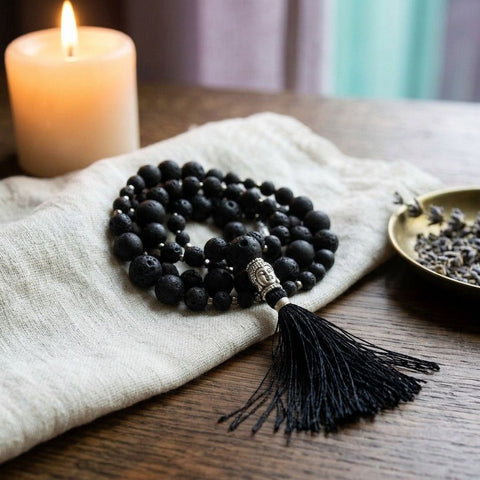 Long lava stone necklace, 42 cm, comes in a gift box with its card
22,90 €
 Engraved brass or copper cuff bracelet: Nepalese designs, adjustable
23,90 €
 Hand-knotted Balinese temple thread bracelet with beads
27,90 €
 Set of three semi-precious stone bracelets with butterfly: 7 gift boxes
31,90 €
 Wooden bead bracelet with Buddha head
10,90 €
 Wooden bead bracelet with lucky coin: 6 tie-on colours
13,90 €
 Tri Hita Karana wood, glass and stone bracelet from Bali
24,90 €