Angel Iah-Hel (No. 62): Regency, Psalm, Symbolism and Reading
Iah-Hel, the sixty-second angel of the Shem HaMephorash, Choir of Archangels, reigns from January 20 to 24. Dates, hour, Psalm 119 and symbolism according to tradition.
Key points
| Number | 62 of 72 |
|---|---|
| Regency period | January 20 to 24 |
| Regency hour | 8:20 p.m. to 8:40 p.m. |
| Choir | Archangels |
| Associated psalm | Psalm 119, verse 159 |
| Hebrew triplet | יהה (Yod, Hé, Hé) |
| Symbolic theme | Wisdom, chosen withdrawal, contemplation |
Who Is Iah-Hel, Angel No. 62?
Iah-Hel is the sixty-second angel on the list, the sixth of the Choir of Archangels. His name is written in several ways, for example Iahhael or Iahel. The hyphen in the French form recalls the composition of the name: Iah, an abbreviation of the divine name (the same as in “alleluia”), and El, “God.”
French books associate him with wisdom, chosen solitude, contemplation and philosophy. They see in him the figure of those who withdraw to reflect or pray: sages, hermits, seekers of meaning.
The number 62 in the list of 72 angels belongs to Iah-Hel; the list itself is drawn, according to Kabbalistic tradition, from three verses of Exodus (14:19 to 21). We present it here according to the Kabbalistic and esoteric tradition, with its divergences. For the history of the system, see our introduction to the 72 angels.
Traditional Reference Points
| Reference point | According to tradition |
|---|---|
| Number in the classical list | 62 of 72 |
| Regency period (5 days) | January 20 to 24 |
| Regency hour (20 minutes) | 8:20 p.m. to 8:40 p.m. |
| Choir | Archangels (the sixth of the 8 angels in the choir) |
| Traditionally associated psalm | Psalm 119, verse 159 |
| Triplet of Hebrew letters | יהה (Yod, Hé, Hé) with the suffix אל (El) |
| Approximate zodiac | Aquarius |
Calendar followed: five days of regency per angel continuously from March 21 (angel No. 1), with no extra day. Printed or online lists do not always agree to within a few days; for leap years, consult the guardian angel calculation. The regency hour is often understood as local solar time, which authors do not always specify.
The Verse and the Name
The verse is a declaration of love for the Law, drawn from Psalm 119: “See how I love your precepts; Lord, in your kindness, give me life.” The word translated as “give me life” also means “revive me”: the psalmist seeks a new breath in study and faithfulness. Psalm 119 is the longest in the Bible, with 176 verses in 22 alphabetical stanzas; this verse belongs to the stanza of the letter Resh.
The name is formed from the triplet יהה (Yod, Hé, Hé) followed by the ending El. Verse 159 bears the same number in Hebrew and English numbering; the Vulgate places this psalm at number 118. The same Psalm 119 serves Nanael (No. 53), with verse 75.
What Tradition Associates with Iah-Hel
According to French editions, Iah-Hel evokes:
- Wisdom acquired through study and experience.
- Chosen withdrawal: setting oneself apart to reflect or pray.
- Contemplation and philosophy.
- Initiation, in the sense of an inner path that takes time.
These associations come from esoteric works; they vary from one author to another. In a tarot reading, one may bring them close to the Hermit, but this connection is modern.
A Reading for Today
Let us distinguish chosen solitude from endured isolation. The first nourishes: a day without screens, a walk alone, a moment of silence. The second weighs, and deserves attention: speak to a loved one, to your doctor, or to a listening service.
Iah-Hel speaks of the first: a withdrawal that prepares the return to others. This figure is not an instruction manual, just an image for deciding to slow down.
His Season and Zodiac Sign
Iah-Hel’s period, January 20 to 24, falls in the heart of winter (northern hemisphere, within the framework of the original calendar). It roughly covers the sign of Aquarius. The Sun enters Aquarius around January 20; the heart of winter has always been a season of withdrawal and silence. In the table of the 36 decans, each ten-day span receives two angels: Iah-Hel shares his with Umabel (No. 61).
Within the Choir of Archangels
In the “Celestial Hierarchy” of Pseudo-Dionysius (around 500), the Archangels form the second-to-last choir, at the centre of the third triad. The Greek word archangeloi means “chiefs of messengers.” The New Testament uses the term twice (1 Thessalonians 4:16 and Jude 9), and Gregory the Great (late 6th century) said that angels carry ordinary messages and archangels the greatest ones. In the list of 72, this choir groups angels 57 to 64; it should not be confused with the eight archangels of our guides to the archangels, which belong to a different classification.
Iah-Hel is the sixth of the Archangels. After Umabel’s friendship, he brings the counterpoint of chosen solitude: one can be with others only if one also knows how to be with oneself. He precedes Anauel.
To place Iah-Hel in the sequence of angels, here are his immediate neighbours: Umabel (No. 61) before him and Anauel (No. 63) after him. The choir is presented in detail on the page Choir of Archangels.
A Gentle Practice with Iah-Hel
A time of silence, lasting thirty minutes:
- Choose a quiet place (see our quiet corner guide) and put your phone out of reach.
- Sit down and stay for twenty minutes without any aim, letting whatever comes arise.
- Write two lines: one recurring thought and one question that stays with you.
- Read verse 159 of Psalm 119, then return to your day without haste.
Silence can bring up emotions. If they overwhelm you, stop, and speak with a loved one or a professional.
What to Keep in Mind
This system is symbolic, not an established fact. No angel grants wisdom or guarantees enlightenment, and no one can promise you any result. Read these pages for the images they offer and for the reflection they prompt.
Let us recall that the Catholic Church does not recognise this system: only Michael, Gabriel and Raphael are named as archangels in Scripture, and the list of 72 names is not among them. The psalms cited remain, for their part, a text of prayer shared by many believers.
See also the guide to the 72 angels and the guide to the archangels.
Frequently asked questions
What is Iah-Hel’s regency period?
According to the classical calendar, Iah-Hel (angel No. 62) reigns from January 20 to 24. Some sources shift these dates by a few days, and leap years are handled differently depending on the author.
At what time does Iah-Hel reign?
His 20-minute regency hour runs from 8:20 p.m. to 8:40 p.m. each day, according to tradition. Many authors specify that this is local solar time.
Which psalm is associated with Iah-Hel?
Tradition associates Iah-Hel with Psalm 119, verse 159: the psalmist declares his love for God’s precepts and asks to be revived according to God’s kindness. Verse lists vary from one author to another.
Why a hyphen in Iah-Hel?
It separates the two divine elements of the name: Iah, an abbreviated form of the name of God, and El, “God.” English editions more often write Iahhael or Iahel.
Is Iah-Hel the angel of hermits?
French editions link him to wisdom and withdrawal, hence the image of the hermit. It is a symbolic reading, with no basis in an ancient text.
What is the difference between solitude and isolation?
Chosen solitude is a time you decide on and return from; isolation is endured and can weigh heavily. If you feel isolated, speak with a loved one or a listening service.
Also read
The meanings mentioned belong to tradition and symbolism. They are neither promises of results nor medical advice. Back to Guide to the 72 guardian angels.
In the shop
Stone jewellery: our products
 Faceted stone necklace with butterfly in real silver-tone leaf, 42 cm
23,90 €
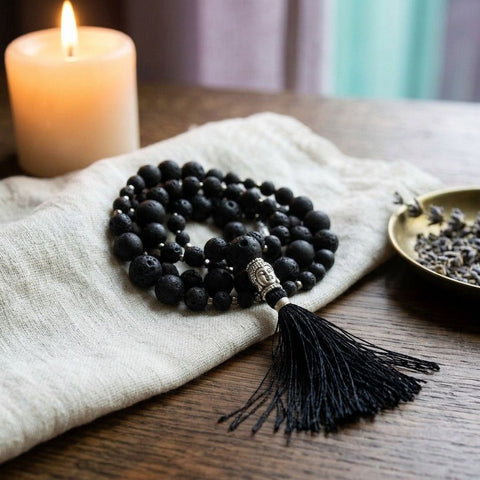 Long lava stone necklace, 42 cm, comes in a gift box with its card
22,90 €
 Engraved brass or copper cuff bracelet: Nepalese designs, adjustable
23,90 €
 Hand-knotted Balinese temple thread bracelet with beads
27,90 €
 Set of three semi-precious stone bracelets with butterfly: 7 gift boxes
31,90 €
 Wooden bead bracelet with Buddha head
10,90 €
 Wooden bead bracelet with lucky coin: 6 tie-on colours
13,90 €
 Tri Hita Karana wood, glass and stone bracelet from Bali
24,90 €