Lelahel: Angel 6 of 72, Regency Dates, Psalm and Symbolism
Lelahel, angel no. 6 of the 72 according to the Kabbalistic and esoteric tradition: light, praise and creation. Regency from 15 to 19 April, 01:40 to 02:00, Seraphim choir.
Key points
| Number | 6 of 72 |
|---|---|
| Annual regency | 15 to 19 April |
| Daily regency | 01:40 to 02:00 |
| Choir | Seraphim |
| Psalm | Psalm 9, verse 12 (Vulgate: 9, verse 12) |
| Three-letter name | ללה (lamed-lamed-hé) |
| Meaning of the name | “God worthy of praise” |
| Zodiac | 25° to 30° of Aries |
Who is Lelahel?
Lelahel is the sixth angel on the list, of the Seraphim choir. His name, “God worthy of praise”, indicates his theme: praise, gratitude, the light of knowledge. He is also associated with artistic creation and with love that radiates. He is the last of the six angels that, in the quinary tradition, correspond to the sign of Aries. His name is sometimes spelled Lélahel.
According to the most widespread interpretation, the name Lelahel is understood as “God worthy of praise”. It is drawn from a three-letter name, ללה (lamed-lamed-hé), obtained by reading together verses 19, 20 and 21 of Exodus chapter 14: each one has 72 letters. To this is added a divine ending, -el, which means “God” in Hebrew.
This page is part of our guide to the 72 angels. The correspondences given here (dates, hour, choir, psalm) are presented according to the Kabbalistic and esoteric tradition: they are symbolic reference points, which everyone is free to accept or not. The historical context is detailed in the introduction to the 72 angels.
Lelahel's reference points
Here are the reference points for Lelahel, as given by the tradition.
| Reference | According to the Kabbalistic and esoteric tradition |
|---|---|
| Number | 6 of 72 |
| Three-letter name | ללה (lamed-lamed-hé) |
| Regency period | 15 to 19 April |
| Regency hours | 01:40 to 02:00 (20 minutes) |
| Choir | Seraphim (angels no. 1 to 8) |
| Psalm | Psalm 9, verse 12 (Vulgate: Psalm 9, verse 12) |
| Zodiac quinary | 25° to 30° of Aries |
| Decan and planet | 3rd decan of Aries, Venus (Chaldean order) |
The dates vary from one source to another. This page follows the classical calendar of five days per angel, continuously from 21 March, over a 365-day year; many sites instead align the periods on the signs of the zodiac and give dates shifted by one or a few days. The quinary is the 5-degree slice of the zodiac attached to this angel; it does not exactly coincide with the actual position of the Sun on these dates. The decan (10 degrees) and its planet come from classical astrology: see the page on the sign of Aries and the profile of the associated planet.
Lelahel's psalm
The associated psalm is Psalm 9, verse 12: “Sing praises to the LORD, who dwells in Zion! Declare among the nations His deeds.” Zion is a poetic name for Jerusalem. This psalm is a song of thanksgiving, attributed to David. In the Hebrew Bible, Psalms 9 and 10 form a sequence built as a partial acrostic; the Greek and Latin translations merged them into one, which explains the differences in numbering between Bibles. For Lelahel, the Vulgate gives the same number (Psalm 9, verse 12). The verse suits an angel named “God worthy of praise” well: it invites us to sing and to tell what is beautiful.
Traditional symbolism
Lelahel is associated with light, in the sense of clarity of mind and the joy of understanding. Esoteric authors make him an angel of the arts, of the sciences and of sincere love. In popular literature, he has also been presented as an angel of “healing”; this must be read in a figurative sense, that of a light which comforts.
- Praise: taking the time to acknowledge what is beautiful or good
- Light: seeking to understand rather than to judge
- Creation: keeping up an artistic practice, however modest
These attributions come from the esoteric literature of the 19th and 20th centuries; they differ from one author to another and rest on no established ancient text. They are themes for reflection, never guaranteed effects.
The time of year and the hour of Lelahel
Lelahel's period falls in mid-April. In Paris, the day then lasts nearly fourteen hours, and light makes its way into daily life: getting up earlier, longer evenings. The Sun is drawing near its entry into Taurus, around 20 April, which closes Aries. This theme of growing light fits well with the meaning of the name.
Each angel also reigns over a fraction of the day, of 20 minutes. For Lelahel, it is from 01:40 to 02:00. According to the tradition, a person born in this slot would be placed under his influence as the “angel of the hour”, in addition to the angel of their birth date. Authors do not agree on which time to use (legal time, as it appears on the birth certificate, or local solar time). Our calculation page details the method.
A gentle practice with Lelahel
Take ten minutes to watch the light of a sunrise or a sunset, then note what you saw. Or draw up a short list of “praises”: three things for which you are grateful. For those who enjoy creating, a page of drawing, poetry or a song sung under one's breath is enough.
A few questions to ask yourself, in writing or aloud:
- What today deserves to be acknowledged?
- What talent or artistic activity would I like to keep alive?
- What light, literal or figurative, am I missing at the moment?
These exercises belong to personal reflection and do not replace medical advice or psychological support.
What belongs to tradition, and its limits
Let us recall the limits. The system of the 72 angels is neither biblical nor recognised by the Catholic Church, which retains only three archangels named in Scripture: Michael, Gabriel and Raphael. It was built within the Christian Kabbalah of the Renaissance, with the list given by Johannes Reuchlin in 1517, later taken up by Agrippa. Nothing demonstrates the action of these angels, and the tradition itself presents the correspondences as conventions. Popular books speak of an angel of “healing”: no evidence links this name to any effect on an illness. In case of a health problem, consult a doctor. Note also that many sites give Lelahel the dates of 15 to 20 April: they align the periods on the signs of the zodiac, which is not the rule followed here.
To put this guide in perspective, see also the guide to the archangels and the page on angel oracles.
Frequently asked questions
Who is Lelahel in the tradition of the 72 angels?
According to the Kabbalistic and esoteric tradition, Lelahel is the 6th of the 72 angels, of the Seraphim choir. His name is understood as “God worthy of praise”, and he is associated with light, praise and creation.
What are Lelahel's regency dates?
In the classical calendar of five days per angel, Lelahel reigns from 15 to 19 April, and from 01:40 to 02:00 during the day. The dates sometimes vary by one or a few days depending on the author.
Which psalm is associated with Lelahel?
Psalm 9, verse 12 (Vulgate: Psalm 9, verse 12). It is the verse “Sing praises to the LORD, who dwells in Zion”, taken from a song of thanksgiving.
Is Lelahel the angel of healing?
Some books present him this way, but this is only a popular reading. According to the esoteric tradition, he symbolises above all light and praise. Nothing demonstrates an effect on health: for an illness, only a doctor can advise you.
Why is light associated with Lelahel?
Because his name means “God worthy of praise”, and praise is often linked, in religious texts, to the image of light. Esoteric authors have extended this connection to clarity of mind and to art.
Also read
The meanings mentioned belong to tradition and symbolism. They are neither promises of results nor medical advice. Back to Guide to the 72 guardian angels.
In the shop
Stone jewellery: our products
 Faceted stone necklace with butterfly in real silver-tone leaf, 42 cm
23,90 €
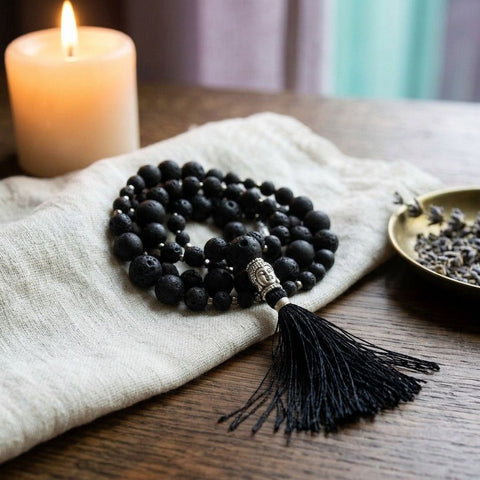 Long lava stone necklace, 42 cm, comes in a gift box with its card
22,90 €
 Engraved brass or copper cuff bracelet: Nepalese designs, adjustable
23,90 €
 Hand-knotted Balinese temple thread bracelet with beads
27,90 €
 Set of three semi-precious stone bracelets with butterfly: 7 gift boxes
31,90 €
 Wooden bead bracelet with Buddha head
10,90 €
 Wooden bead bracelet with lucky coin: 6 tie-on colours
13,90 €
 Tri Hita Karana wood, glass and stone bracelet from Bali
24,90 €